
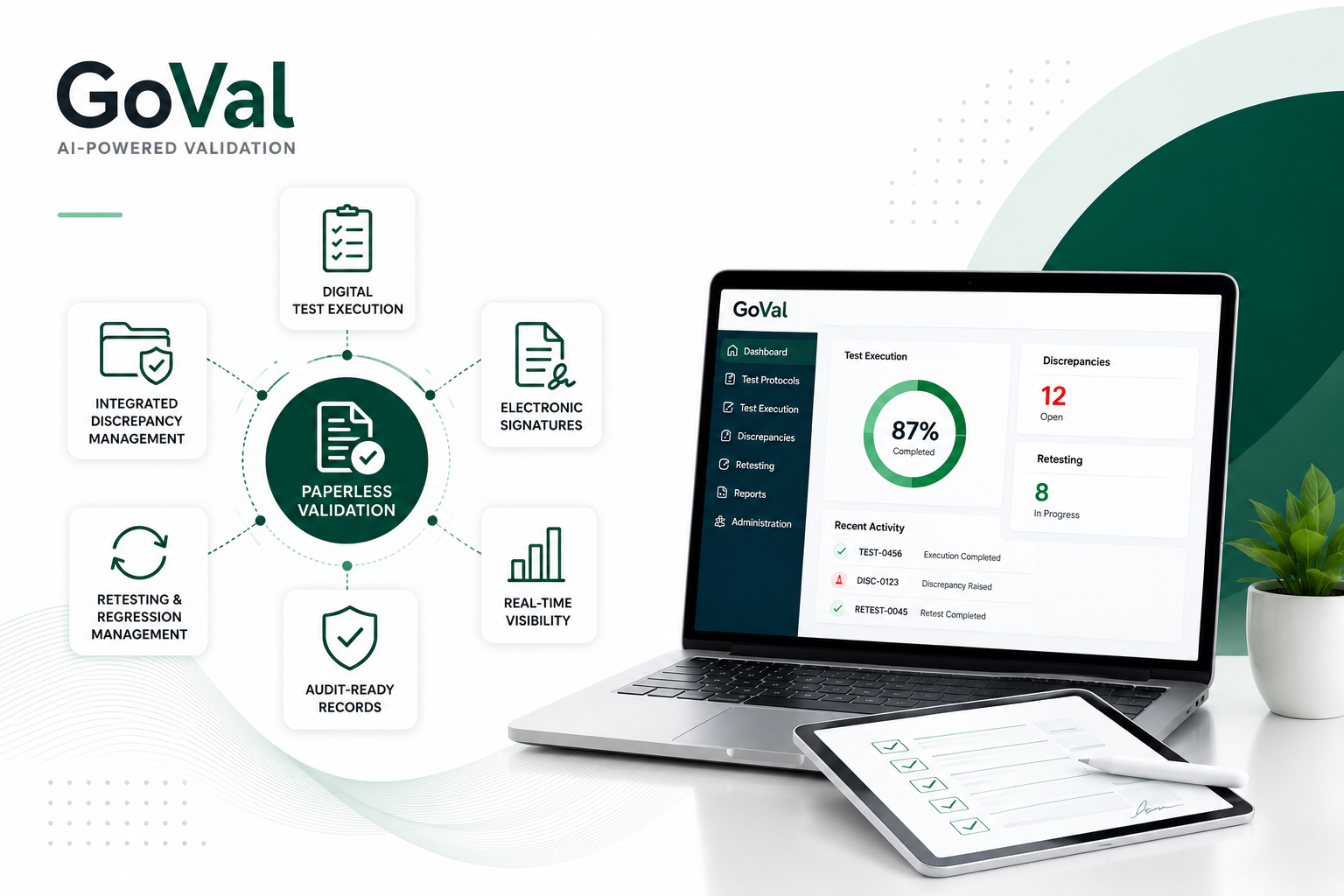
The pharmaceutical industry is evolving rapidly, and so are regulatory expectations around Computer System Validation (CSV). As pharma companies invest in digital transformation, traditional paper-based validation processes are increasingly becoming inefficient, time-consuming, and difficult to manage. Paperless test execution and digital CSV solutions are changing the game — improving traceability, compliance, accuracy, and collaboration across validation teams.
Key Challenges in Paper-Based CSV
Traditional paper-based CSV involves printed protocols, handwritten execution records, spreadsheets, and physical approvals. These methods create several operational and compliance challenges for modern pharmaceutical organizations.
- Incorrect data entry
- Missing signatures or dates
- Use of outdated protocol versions
- Inconsistent execution practices
- Incomplete documentation
Even minor inconsistencies can lead to deviations, delayed approvals, and audit observations.
- Transcription mistakes
- Illegible handwritten records
- Duplicate documentation
- Lost or misplaced validation documents
- Manual calculation errors
Teams spend additional time correcting documentation instead of focusing on validation quality.
- Linking discrepancies to specific test cases
- Tracking corrective actions
- Monitoring deviation closure
- Maintaining audit-ready records
- Managing approvals efficiently
Without integrated discrepancy management, identifying root causes becomes a lengthy process.
- Identify impacted test scripts
- Re-execute affected test cases
- Reprint updated protocols
- Maintain separate retest evidence
- Track multiple approval cycles
These inefficiencies can significantly impact system go-live timelines.
Expectations from Paperless CSV / Digital CSV
Organizations are now looking for intelligent digital validation solutions that improve compliance, reduce manual effort, and simplify validation management.
- Controlled templates
- Standardized workflows
- Automated version control
- Centralized documentation
- Real-time execution tracking
- Electronic signatures
- Automated timestamps
- Mandatory field validations
- Automated workflow checks
- Real-time execution alerts
- Contemporaneous deviation logging
- Issue tracking automation
- CAPA integration
- Workflow-based approvals
- End-to-end traceability
- User-initiated retesting workflows
- Complete retest history
- Discrepancy-to-retest linkage
- Impacted regression script identification
- Centralized execution visibility
- Electronic approvals
- Secure audit trails
- Instant document retrieval
- Real-time dashboards
- Centralized validation records
How GoVal Addresses These Challenges
GoVal helps pharmaceutical organizations move from fragmented paper-based validation to a centralized and compliant digital CSV environment — with automated workflows, integrated discrepancy management, and real-time visibility.
- Improve execution consistency
- Eliminate paper-based documentation
- Reduce manual administrative work
- Maintain centralized validation records
- Electronic signatures
- Automated timestamps
- Built-in workflow validations
- Controlled user access
- Secure audit trails
- Raise discrepancies during execution directly from the system
- Link issues to test steps
- Assign and link corrective actions
- Track issue closure status
- Maintain complete traceability
- Initiate retesting workflows from discrepancy assessment outcomes
- Clone existing test scripts for faster retest execution
- Track retest execution centrally
- Identify impacted regression scripts quickly
- Ensure traceability between discrepancies, corrective actions, and retesting
- Faster approvals
- Reduced review bottlenecks
- Improved collaboration
- Quicker retest approvals
- Reduced project delays
Automated notifications further improve communication between validation stakeholders.
Frequently Asked Questions
What are the key challenges in paper-based Computer System Validation (CSV)? +
How does paperless test execution improve pharma validation? +
What is integrated discrepancy management in CSV? +
How does GoVal simplify retesting and regression execution? +
What is the difference between traditional paper-based CSV and GoVal's digital CSV approach? +
Ready to move beyond paper-based CSV?
GoVal simplifies validation execution with digital test protocols, integrated discrepancy management, and audit-ready records — all in one pre-validated platform.